
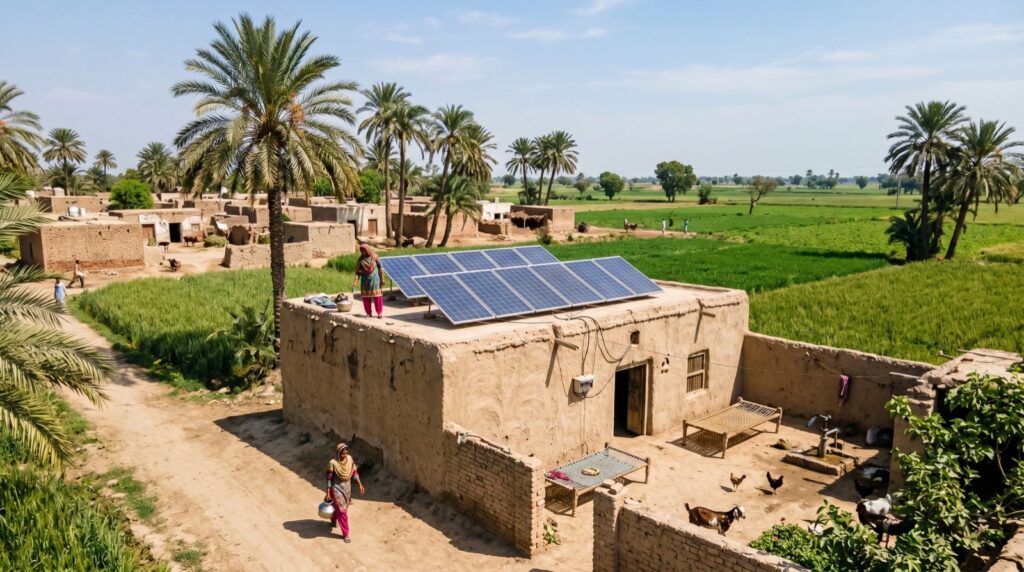
Booking a solar installation in Sialkot in 2026 rewards homeowners who do their homework, because the difference between a great system and a disappointing one comes down to components and craftsmanship. This guide gives you a buyer’s checklist that separates serious installers from quick-sale operators.
Why a solar installation in Sialkot needs extra scrutiny
Sialkot’s climate blends hot summers with humid, hazy spells, and that combination stresses cheap equipment. Panels here must shed heat efficiently, and inverters must tolerate temperature swings without tripping.
The city’s export-driven economy also means many homes and small factories run heavy daytime loads, which is exactly when solar performs best. A properly matched system can cover the bulk of that demand and slash the monthly bill.
Yet the market is crowded with sellers who compete on price alone. The U.S. National Renewable Energy Laboratory repeatedly finds that installation quality, not just panel brand, drives long-term performance. That single insight should reshape how you shop.
The component checklist that protects your money
Before you sign anything, verify each part of the proposed system. A weak link anywhere drags down the whole array.
- Panels: Insist on Tier-1 monocrystalline modules with a 25-year performance warranty.
- Inverter: Prefer established brands with local service centers, not gray-market units.
- Cables and connectors: UV-rated DC cable and genuine MC4 connectors prevent hotspots.
- Structure: Hot-dip galvanized or anodized aluminum rails resist Sialkot humidity.
- Protection: Proper earthing, surge arrestors, and correctly rated breakers.
How to read a warranty properly
A 25-year panel warranty sounds reassuring until you ask who honors it. Product warranties, performance warranties, and workmanship warranties are three different promises. Get all three in writing, and confirm the installer, not a distant importer, backs the labor.
What separates a professional installer from a salesman?
The best way to judge an installer is to watch how they behave before you pay. Professionals ask questions; salesmen make claims.
| Behavior | Professional Installer | Quick-Sale Operator |
|---|---|---|
| First step | On-site survey and shade study | Instant price over the phone |
| Sizing | Based on 12 months of bills | One-size-fits-all package |
| Documentation | Single-line diagram and datasheets | Verbal promises |
| After-sales | Monitoring and service contract | Disappears after payment |
If a vendor quotes a price before seeing your roof, treat it as a red flag. Every home has different shade, wiring runs, and load profiles, so a real quote cannot exist without a survey.
Vetting questions to ask before you sign
Arrive at the meeting with a script. The answers reveal experience quickly.
- Can you show me three local installations I can visit or call?
- Are your technicians AEDB-registered for net metering work?
- What exact inverter and panel model will you install, and why?
- Who handles service if the inverter faults in year four?
- Is net metering application support included in the price?
Vetting quality service providers this way costs you an afternoon and saves you years of regret. Written answers carry more weight than confident talk.
Does the same installer serve nearby cities well?
Many buyers wonder whether a company rooted in one city can deliver elsewhere. The honest answer depends on their coverage and logistics, not their marketing.
A capable provider offering solar installation in Sialkot should have local crews and a nearby stock of spares so service calls do not turn into week-long waits. Ask specifically about response time for your postal area.
Regional experience helps too. A firm that also operates as a solar company in Rawalpindi often brings standardized processes and bulk purchasing power that translate into better pricing and more consistent workmanship across cities.
One practical tip most buyers miss
Ask to see the installer’s monitoring dashboard from a past project. A firm that proudly shows real, live generation data from a customer’s system has nothing to hide. One that fumbles or refuses probably does not monitor its installations at all, which means faults go unnoticed.
Understanding warranties, service, and spares
Warranties mean little without a service pipeline behind them. Before signing, map out exactly what happens when something breaks in year five, because that is when cheap installers vanish.
Ask where spare inverters are stocked and how quickly a technician reaches your area. In Sialkot’s humid climate, connectors and mounting hardware face constant corrosion stress, so a same-week service response separates a serious firm from a fly-by-night seller.
Keep your own documentation folder too. Store the single-line diagram, panel and inverter serial numbers, and warranty certificates in one place. If you ever sell the property or file a claim, that folder proves the system was installed to spec.
Budgeting for the full lifecycle
Smart buyers plan for the whole 25-year journey, not just installation day. Panels typically last the full quarter century, but the inverter usually needs replacement once, around years eight to twelve. Setting aside a small reserve for that swap keeps a surprise from feeling like a crisis.
Also budget for occasional cleaning, especially after dust storms and before the peak summer season. A modest, predictable maintenance habit protects the large upfront investment you made in quality components.
Red flags that should end the conversation
Some warning signs are serious enough to walk away immediately. Recognizing them early saves you from a costly mistake.
- A quote issued without any site visit or shade study.
- Refusal to name the exact inverter and panel models in writing.
- Pressure tactics or “today only” pricing that rush your decision.
- No verifiable local references or physical office address.
- Vague warranty terms that dodge the question of who honors labor.
Frequently Asked Questions
How do I verify an installer is legitimate?
Check for a physical office, AEDB registration, and at least three verifiable local references. Visit a completed project if you can, and confirm the warranty terms are written into your contract.
What is the most common corner installers cut?
Wiring and protection gear. Buyers focus on panel brands, so installers save money on cheap DC cable, missing surge protection, or poor earthing, which shortens system life and creates safety risks.
Should I buy panels myself and hire labor separately?
Usually no. When one company supplies and installs, a single party owns the warranty. Splitting responsibility invites finger-pointing if something fails, leaving you stuck between suppliers.
How long should a good system last in Sialkot’s climate?
Quality panels last 25 years or more, and a reputable inverter runs 8 to 12 years before replacement. Proper corrosion-resistant mounting is essential given the local humidity.
How do I compare two close quotes?
When two installers land within a small price range, ignore the headline number and compare the components and service promises instead. Put the inverter models, panel warranties, and response times side by side. The firm that documents more usually delivers more, because thorough paperwork reflects a disciplined process on the roof as well.
Choose quality, then choose price
A solar installation in Sialkot done by a diligent, well-equipped team becomes a quarter-century asset. Use the checklist above, ask the hard questions, and demand written warranties before you pay a rupee. Reach out for a proper on-site survey and let the evidence, not the sales pitch, guide your decision.